


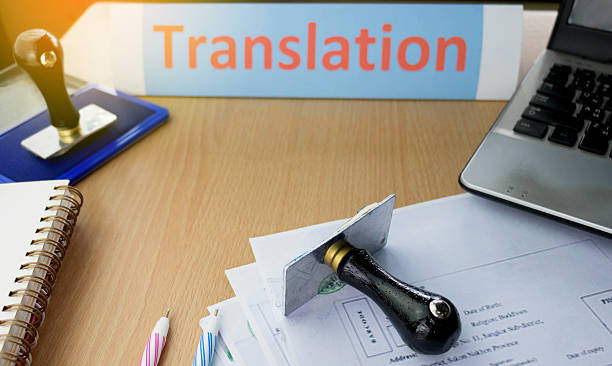
Introduction: Translation Is Not a Formality in Egypt
For anyone submitting foreign documents for official use in Egypt, certified translation is not a cosmetic step—it is a legal requirement. Many applicants mistakenly believe that any accurate translation will suffice. In reality, Egyptian authorities enforce strict standards on who can translate, how documents are translated, and how translations are presented.
A document can be perfectly notarized and fully legalized, yet still be rejected if the Arabic translation does not meet Egyptian requirements. This is one of the most common—and most frustrating—reasons for delays in work permits, residency applications, company registration, and court filings.
This guide explains:
- When certified translation is required in Egypt
- What “certified” actually means under Egyptian practice
- Common translation mistakes that cause rejection
- How individuals and businesses can ensure acceptance the first time
- How Expats Link manages certified translation as part of a compliant legalization strategy
When Is Certified Translation Required in Egypt?
As a general rule, any document submitted to an Egyptian authority must be in Arabic. If the original document is issued in another language, a certified Arabic translation is mandatory.
Certified translation is required for documents used in:
- Work permit and labor files
- Residency and immigration applications
- Company incorporation and commercial registration
- Banking and financial transactions
- Court proceedings and legal disputes
- University admission and degree equivalency
- Family and civil status matters
Even if an authority accepts a foreign-language document for review, the official record must be in Arabic.
What Does “Certified Translation” Mean in Egypt?
In Egypt, a certified translation is not simply a signed statement that a translation is accurate. It must meet specific professional and legal criteria.
A translation is considered certified when:
- It is completed by a recognized professional translator or translation office
- The translator attests that the translation is complete and accurate
- The translation is stamped and signed
- The formatting mirrors the original document
- Names, dates, titles, and numbers match exactly
In many cases, the translation itself may also need to be presented alongside legalized originals.
Who Is Authorized to Provide Certified Translation in Egypt?
Egyptian authorities generally require translations to be completed by:
- Licensed translation offices
- Court-recognized translators
- Translation providers accepted by government entities
Translations prepared by:
- Friends or colleagues
- In-house company staff
- Unregistered freelancers
Are commonly rejected, even if linguistically accurate.
Documents That Commonly Require Certified Translation
Employment and Immigration
- University degrees
- Academic transcripts
- Police clearance certificates
- Employment contracts
- Experience certificates
Business and Corporate
- Articles of association
- Powers of attorney
- Board resolutions
- Commercial contracts
Personal and Family
- Birth certificates
- Marriage certificates
- Divorce judgments
Legal and Court Use
- Foreign court rulings
- Affidavits and declarations
In all these cases, certified Arabic translation is mandatory.
Certified Translation and Legalization: How They Work Together
Translation does not replace legalization—and legalization does not replace translation. The two work together.
A typical compliant sequence is:
- Original document issued
- Notarization and authentication abroad
- Egyptian embassy legalization
- Attestation by the Egyptian Ministry of Foreign Affairs
- Certified Arabic translation
- Submission to the relevant Egyptian authority
Submitting a translation before legalization—or legalizing an incorrectly translated document—often leads to rejection.
The Most Common Certified Translation Mistakes in Egypt
- Name Inconsistencies
Different spellings of the same name across documents are one of the top causes of rejection.
Egyptian authorities require:
- Exact matching with the passport
- Consistent order of names
- No omitted middle names
- Incorrect Legal Terminology
Literal translation without legal context can distort meaning.
For example:
- Academic titles
- Legal statuses
- Company roles
Must be translated using recognized legal terminology, not general language.
- Missing Stamps or Certification
A translation without:
- Official stamp
- Signature
- Certification statement
Is often considered unofficial and rejected.
- Mismatched Formatting
Authorities expect the translation to reflect:
- The structure of the original
- Page numbering
- Seals and stamps (described, not copied)
Poor formatting raises doubts about accuracy.
A Real-World Scenario: Translation Was the Only Problem
A professional relocating to Cairo submitted a fully legalized degree. However, the Arabic translation used a shortened version of his name that did not match his passport.
The outcome:
- Work permit application rejected
- Translation redone
- File resubmitted
- One-month delay
The original document was correct—the translation was not.
Why Businesses Must Be Especially Careful
For companies, translation errors can:
- Delay employee onboarding
- Disrupt project timelines
- Cause compliance issues
- Lead to repeated government submissions
HR teams often underestimate translation requirements, assuming legalization alone is enough. It is not.
How Expats Link Ensures Certified Translation Compliance
At Expats Link, certified translation is handled as a legal compliance service, not a linguistic task.
Our Clients Benefit From:
- Verification of whether translation is required
- Coordination with recognized translators
- Legal terminology review
- Name and data consistency checks
- Alignment with embassy and MOFA requirements
- End-to-end management with legalization
We ensure translations are accepted the first time—without correction or resubmission.
Practical Tip: Always Translate from the Final Legalized Version
One best practice is to translate only after the document has completed legalization. This ensures:
- Final stamps are reflected
- No re-translation is required
- Costs are not duplicated
Early translation often leads to repeat work.
Conclusion: Certified Translation Is a Legal Requirement, Not a Language Task
In Egypt, certified translation is a decisive factor in whether documents are accepted or rejected. Accuracy alone is not enough—compliance with Egyptian standards is essential.
With Expats Link, individuals and businesses gain a trusted local partner who ensures translations meet legal, linguistic, and procedural requirements—so documents move forward without delay.
Contact Expats Link Today
If you need certified translation for use in Egypt—or support with document legalization, work permits, or immigration—contact Expats Link for a confidential consultation. We help you get it right from the start.